В рамках реалізації проєкту «Використання сили водоростей для зменшення забруднення та блакитного зростання» (Акронім -проекту – AlgaeRevive, код проекту – BSB00091) в рамках програми Interreg NEXT Black Sea Basin Programme, що фінансується ЄС, OДAУ успішно проводить дослідження для внеску в «Створення Центру знань про водорості Чорного моря».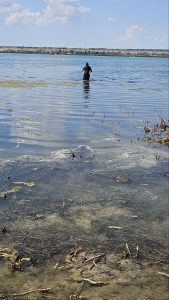
Дослідження проводилися з 27 червня по 13 серпня 2025 року. Зразки води з озера Ялпуг були зібрані 27 червня та 2 серпня 2025 року. Відбір проб води з Чорного моря проводився 11-13 серпня. Пункти відбору проб води розташовувалися в прибережній смузі озера Ялпуг і були обрані залежно від інтенсивності росту макрофітних водоростей. Основним видом водоростей, який використовувався при виборі пункту відбору води, була Cladophora glomerata. Пункти відбору проб води з Чорного моря розташовувалися на узбережжі міста Одеса.
Визначено перелік показників.
Для культивування водоростей іншого типу використовували скляні біореактори місткістю 30 л. Умови культивування: освітлення штучне, постійне, потужністю 15 Вт на реактор. Склад поживного середовища: нітрат калію – 5 г/л, сульфат магнію – 2,5 г/л, дигідрофосфат калію – 1,25 г/л, ЕДТА – 0,037 г/л, сульфат заліза – 0,009 г/л.
 Було визначено, що у природних водоймах спостерігався лужний pH, який коливався від 8,8 до 9,5. На відміну від природних водойм, у штучному середовищі pH був слабокислим (6,4-6,7). Окисно-відновний потенціал не мав суттєвих відмінностей між штучним середовищем та водою з природних джерел, за винятком води з озера Ялпуг наприкінці червня. Природні водойми мали значно вищу солоність, загальну мінералізацію та електропровідність порівняно зі штучним середовищем. У порівнянні розчину штучного середовища з морською водою, солоність, загальна мінералізація та електропровідність були в 3-5 разів нижчими, а в порівнянні з водою з озера Ялпуг, в 14-200 разів нижчими. Концентрація розчиненого кисню була найнижчою в морській воді (5,5 мг/л) і найвищою в культуральному середовищі на початку росту Chlorella (9,4 мг/л). Каламутність також була найнижчою в морській воді (2 одиниці) і найвищою в поживному середовищі наприкінці фази росту (610 одиниць). Температура була динамічно змінним показником і коливалася для зразків у діапазоні 22-31°C.
Проєкт реалізується з 3 вересня 2024 року по 2 березня 2027 року, а його загальна вартість становить 1470899,04 євро, з яких 1329809,13 євро – це фінансування, надане Європейським Союзом через Програму Interreg NEXT Black Sea Basin Programme. Прийнятний партнерський бюджет ОДАУ становить 219564,00 євро.
ОДАУ вдячний ЄС та консорціуму проекту за можливість зробити вагомий внесок у культивування водоростей та зменшення забруднення морського середовища.
“Harnessing Algae Power for Pollution Reduction and Blue Growth
Odesa State Agrarian University
https://osau.edu.ua/en
osau@osau.edu.ua
Publishing date August 29, 2025
The responsibility for the content of this material is that of the author(s). The content of this material does not necessarily represent the official position of the European Union. Reproduction is authorized, provided the source is acknowledged, and any changes are indicated”