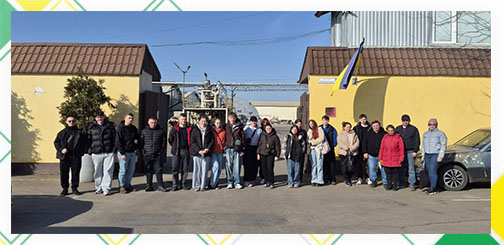
В рамках реалізації проєкту «Використання сили водоростей для зменшення забруднення та блакитного зростання» (Акронім -проекту – AlgaeRevive, код проекту – BSB00091) в рамках програми Interreg NEXT Black Sea Basin Programme, що фінансується ЄС, в OДAУ завершили експериментальне дослідження умов культивування мікроводоростей Chlorella у штучних біореакторах порівняно з природними водоймами регіону.
Про дослідження
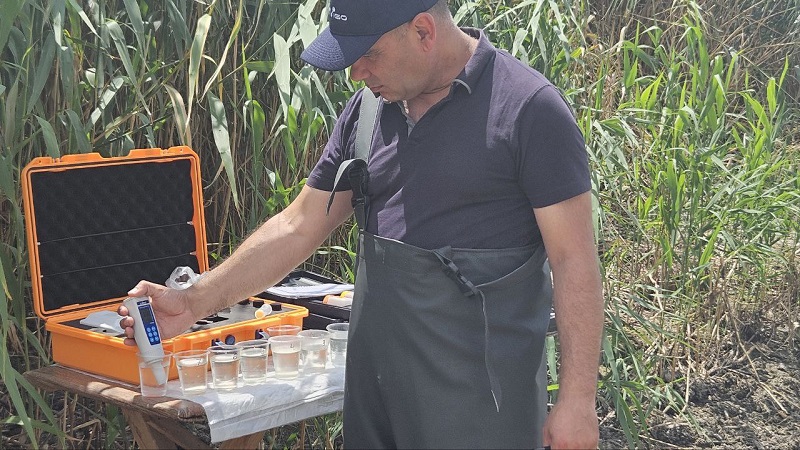
Робота проводилася з кінця червня до середини серпня 2025 року. Дослідники аналізували фізико-хімічні параметри води з озера Ялпуг та Чорного моря, порівнюючи їх з показниками поживного середовища в лабораторних умовах.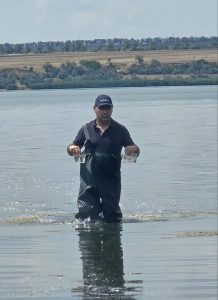
Мікроводорості є важливими біоіндикаторами екологічного стану водних екосистем. Їх ріст залежить від численних чинників: освітлення, температури, хімічного складу води, концентрації кисню та вуглекислого газу. Розуміння цих параметрів дозволяє прогнозувати зміни в активності росту різних видів мікроводоростей.
Методологія
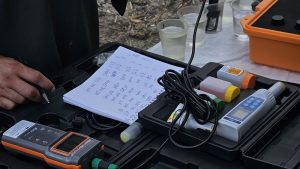
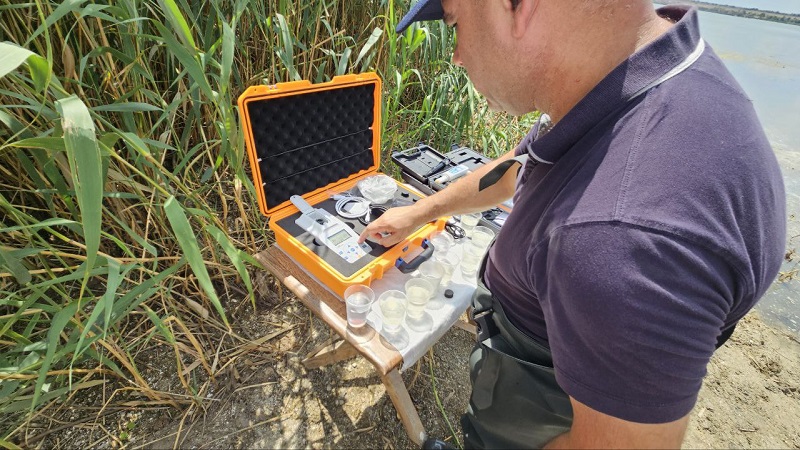
Проби води відбиралися на озері Ялпуг 27 червня та 8 серпня, а також на узбережжі Чорного моря в районі Одеси 11-13 серпня 2025 року. Для кожної проби визначалися ключові показники: рН, окисно-відновний потенціал, електропровідність, загальна мінералізація, температура, вміст кисню та каламутність води.
Паралельно проводилося культивування Chlorella у скляних біореакторах об’ємом 30 літрів з використанням комерційної культури від приватного підприємства «BioGreen» (Біла Церква). Штучне освітлення потужністю 15 Вт забезпечувало стабільні умови росту.
Основні результати
Дослідження виявило суттєві відмінності між природними водоймами та штучним поживним середовищем:
Показник pH: У природних водоймах зафіксовано лужну реакцію (8,8-9,5), тоді як у культуральному середовищі pH залишався слабокислим (6,4-6,7), що оптимально для Chlorella.
Мінералізація: Озеро Ялпуг показало найвищі значення солоності та загальної мінералізації — у 14-200 разів вище, ніж у штучному середовищі. Чорноморська вода мала проміжні показники — в 3-5 разів вищі за культуральне середовище.
Електропровідність: Цей показник корелював з рівнем мінералізації, демонструючи найвищі значення в озері Ялпуг (1387-1478 мкСм/см).
Розчинений кисень: Максимальна концентрація (9,4 мг/л) спостерігалася у поживному середовищі на початку культивування, найнижча (5,5 мг/л) — у морській воді.
Каламутність: Штучне середовище на піку біомаси Chlorella досягло 610 одиниць, тоді як прозорість морської води залишалася високою (2 одиниці).
 Висновки та практичне значення
Науковці пояснюють високу мінералізацію озера Ялпуг його природними особливостями як високосолоного водоймища. Відсутність опадів до кінця червня призвела до підвищення солоності, тоді як інтенсивні дощі в липні дещо розбавили воду, що відобразилося в серпневих пробах.
Високий рівень солоності та мінералізації робить ці природні водойми малопридатними або зовсім непридатними для культивування Chlorella. Тривалі періоди без опадів можуть призводити до часткового висихання озера та активізації галофільної мікрофлори. З іншого боку, рясні опади можуть розбавляти морську воду, провокуючи інтенсивне цвітіння зелених одноклітинних водоростей.
Під час відбору проб морської води значних атмосферних опадів не спостерігалося, тому рівень мінералізації був достатньо високим, а температура води невисокою (22°C), що не сприяло розмноженню одноклітинних водоростей.
Результати дослідження мають важливе значення для розуміння оптимальних умов промислового культивування мікроводоростей та оцінки екологічного стану природних водойм регіону.
Детальні показники фізико-хімічних параметрів води
| Джерело проби | рН | ОВП, мВ | Електропровідність, мкСм/см | ЗМВ, мг/л | Солоність, мг/л | РК, мг/л | Каламутність, од. | Температура, °C |
| Озеро Ялпуг (27.06) | 9,5±0,03 | 110,3±2 | 1478±5,6 | 975±7,6 | 704±10 | 7,3±0,1 | 74,4±6,2 | 29,7±0,2 |
| Озеро Ялпуг (08.08) | 8,8±0,01 | 63,8±0,8 | 1387±6,2 | 920±2,4 | 680±8,2 | 7,0±0,2 | 73,9±6,3 | 25,5±0,1 |
| Чорне море (11-13.08) | 8,8±0,003 | 66,7±0,7 | 25,3±0,09 | 16,6±0,03 | 15,6±0,03 | 5,5±0,25 | 2,0±0,003 | 22,1±0,08 |
| Поживне середовище (початок) | 6,41±0,01 | 67,1±1 | 7,21±0,03 | 4,75±0,005 | 3,95±0,006 | 9,4±0,3 | 4,63±0,04 | 30,6±0,1 |
| Поживне середовище (кінець) | 6,7±0,02 | 51,9±0,5 | 9,9±0,02 | 6,52±0,005 | 5,61±0,004 | 7,4±0,3 | 610±28 | 31,3±0,1 |
Примітка: ОВП — окисно-відновний потенціал; ЗМВ — загальний вміст мінералів; РК — розчинений кисень
Проєкт реалізується з 3 вересня 2024 року по 2 березня 2027 року, а його загальна вартість становить 1470899,04 євро, з яких 1329809,13 євро – це фінансування, надане Європейським Союзом через Програму Interreg NEXT Black Sea Basin Programme. Прийнятний партнерський бюджет ОДАУ становить 219564,00 євро.
ОДАУ вдячний ЄС та консорціуму проекту за можливість зробити вагомий внесок у культивування водоростей та зменшення забруднення морського середовища.
“Harnessing Algae Power for Pollution Reduction and Blue Growth
Odesa State Agrarian University
https://osau.edu.ua/en
osau@osau.edu.ua
Publishing date October 08, 2025
The responsibility for the content of this material is that of the author(s). The content of this material does not necessarily represent the official position of the European Union. Reproduction is authorized, provided the source is acknowledged, and any changes are indicated”