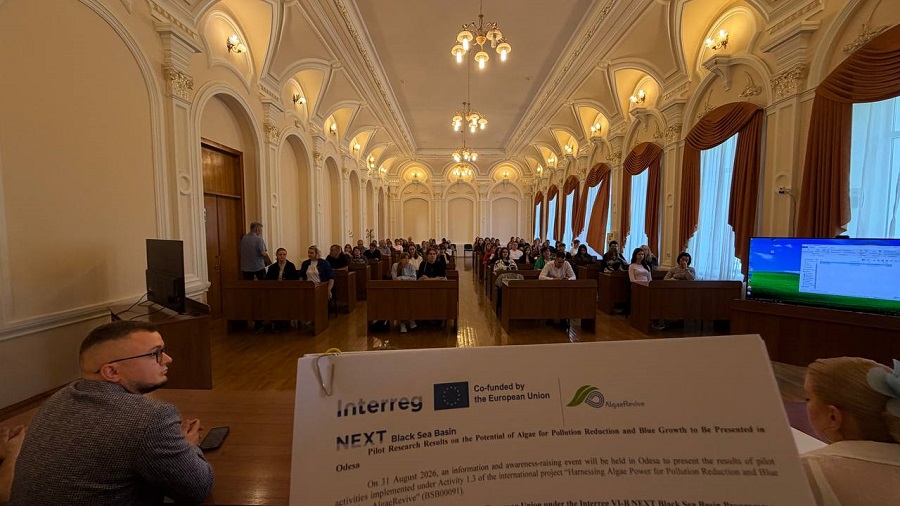
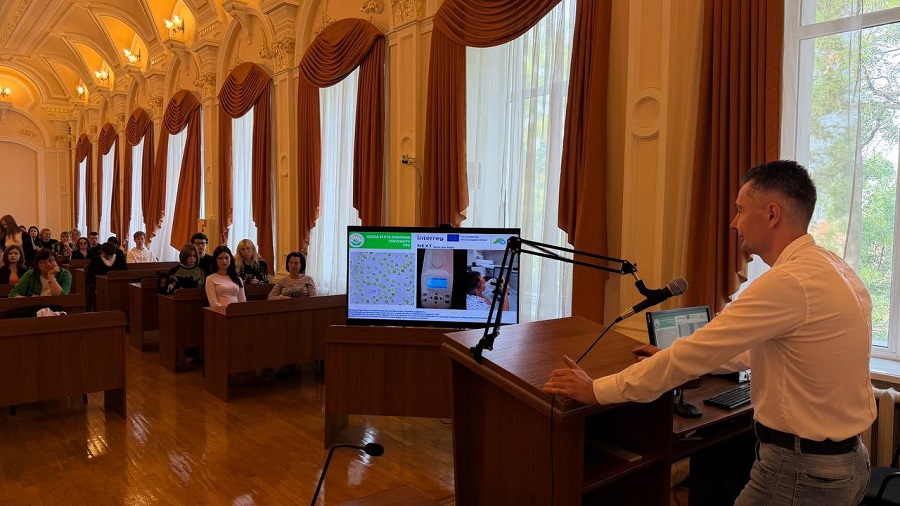
On 31 August 2026, an information and awareness-raising event presenting the results of pilot activities under Activity 1.3 of the international project “Harnessing Algae Power for Pollution Reduction and Blue Growth – AlgaeRevive” (BSB00091) was held in Odesa. The event brought together 80 participants, including representatives of the scientific community, students, young researchers and other stakeholders. The project is funded by the European Union under the Interreg VI-B NEXT Black Sea Basin Programme.
The event was conducted by the Private Institution “Educational and Research Institute of Biotechnology and Biosafety” at the request of Odesa State Agrarian University. It was held at OSAU and under its supervision, as the University is a partner in the AlgaeRevive project. The event was organised in a blended format, combining on-site and online participation.
The event aimed to present the results of the pilot research conducted under Activity 1.3 and to discuss opportunities for the practical and industrial use of algae to reduce pollution in aquatic ecosystems and support blue growth.
Participants were presented with the results of research into the potential of the microalga Chlorella vulgaris, including technologies for its cultivation under the conditions of Ukraine’s steppe zone and the effects of biologically active substances on its development. 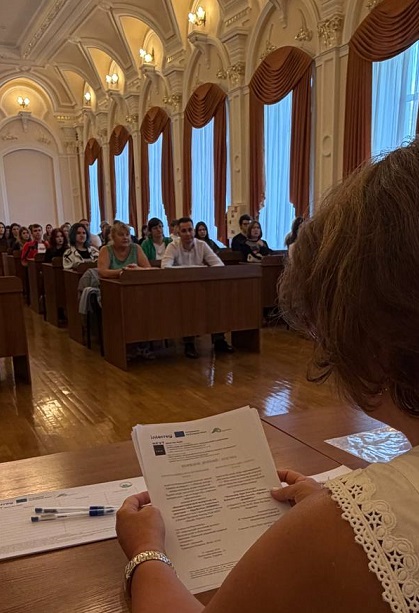 The potential use of Chlorella vulgaris as a natural biostimulant and its effects on the germination, development and productivity of agricultural crops were also assessed.
The event also addressed the potential of multicellular algae found in the Odesa region, opportunities for obtaining biologically active substances from them, extraction technologies and possible areas of practical application. An important part of the programme was the presentation of research results concerning the ability of Chlorella vulgaris to remove pesticides from the aquatic environment. Participants discussed the prospects for using algae to reduce pollution and improve the condition of aquatic ecosystems.
A separate session focused on the transition from scientific research to practical application. It presented the key results of laboratory research and field pilot activities, practical recommendations and prospects for the industrial use of algae.
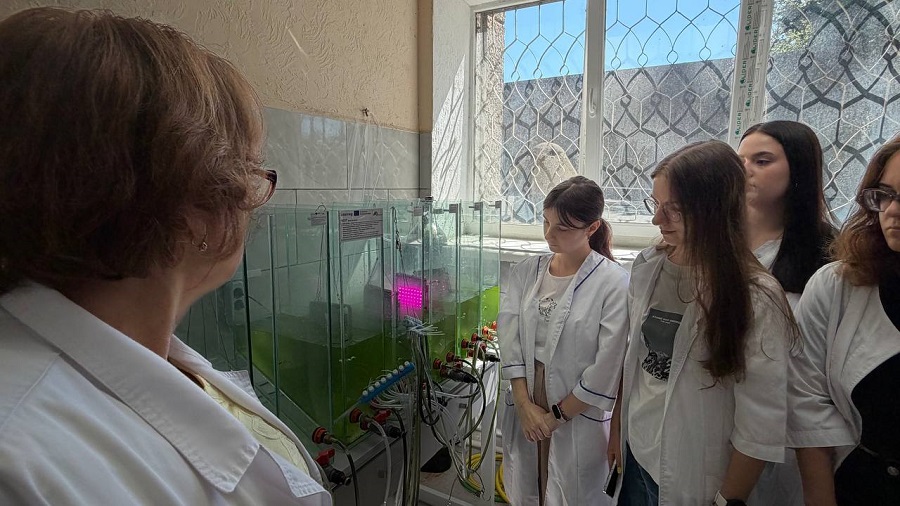
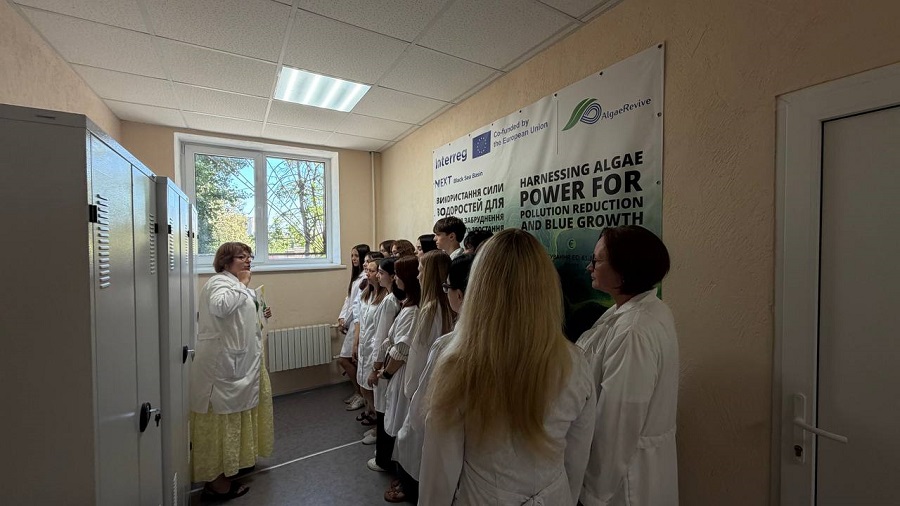
The event included a practical training session for young researchers and students entitled “Research on the Effectiveness of Using Algae to Reduce Pollution.” Participants learned about the main approaches to studying the properties of algae, assessing their effectiveness and evaluating their potential application to improve the condition of aquatic ecosystems.
The event concluded with the panel discussion “Algae for Pollution Reduction and Blue Growth: Opportunities, Challenges and Prospects.”, conducted by a member of the project team to raise stakeholder awareness about the project as a whole. During the discussion, participants became aware of the project activites implementation, exchanged experience and considered opportunities for the further involvement of students and young researchers in research and the practical application of algae-based technologies.
The event contributed to disseminating the results of the AlgaeRevive pilot research, facilitating knowledge exchange among participants and discussing opportunities to use the results obtained to reduce pollution, improve the condition of aquatic ecosystems and support blue growth in the Black Sea region.
The project is being implemented from 3 September 2024 to 2 March 2027. Its total value is EUR 1,470,899.04, of which EUR 1,329,809.13 is funding provided by the European Union through the Interreg NEXT Black Sea Basin Programme. The eligible budget of Odesa State Agrarian University as a project partner is EUR 219,564.00.
“Harnessing Algae Power for Pollution Reduction and Blue Growth
Odesa State Agrarian University
https://osau.edu.ua/en
osau@osau.edu.ua
Publishing date September 2, 2026
The responsibility for the content of this material is that of the author(s). The content of this material does not necessarily represent the official position of the European Union. Reproduction is authorized, provided the source is acknowledged, and any changes are indicated”