The Black Sea coastal region of Ukraine faces unprecedented environmental challenges that threaten both ecosystems and communities. Recent comprehensive research reveals alarming trends across seaside regions — where climate change, soil degradation, and human activities converge to create complex environmental pressures.
The Scale of the Challenge
The southern regions of Ukraine encompass approximately 160,000 km² of diverse landscapes, from fertile chernozem soils to fragile coastal ecosystems. However, this territory faces multiple interconnected threats: struggling with soil erosion, saltwater intrusion; degradation of the Danube Delta’s unique wetlands; some territories are in desertification processes, with sandy soils particularly vulnerable to wind erosion; industrial pollution legacy combined with agricultural intensification; mining-related land degradation and military conflict impacts.
Across all regions, soil erosion emerges as a critical concern. The research indicates varying erosion degrees, with some areas showing moderate to severe degradation patterns. Climate projections suggest intensifying challenges, with temperature increases of 2-4°C by 2100 and altered precipitation patterns creating more frequent drought-wet cycles.
Nature-Based Solutions: A Path Forward
Nature-based solutions offer transformative potential for addressing these interconnected challenges. In Odeska Oblast specifically, implementing ecosystem-based approaches could yield significant benefits across multiple dimensions.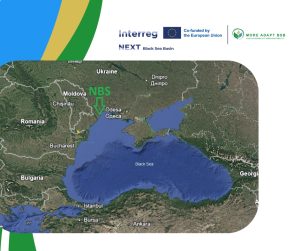
Ecological Benefits: Establishing green zones would enhance biodiversity while providing natural flood protection. Reconstructed salt marshes and reed beds could filter pollutants, stabilize shorelines, and create resilient habitats for migratory birds using the Black Sea flyway.
Social Benefits: Nature-based restoration creates employment opportunities in rural communities while improving public health through enhanced air and water quality. Restored landscapes provide recreational spaces and cultural heritage preservation, particularly important for communities displaced by conflict.
Economic Advantages: Investment in natural infrastructure proves cost-effective compared to traditional engineering solutions. Restored ecosystems support sustainable fisheries, eco-tourism, and carbon sequestration markets. Agricultural productivity improves through soil conservation and water retention in treated areas.
Regional and Basin-Wide Impact
The implementation of nature-based solutions in Odeska Oblast creates effects throughout the entire Black Sea basin, while restored coastal territories contribute to regional carbon storage. Cross-border ecosystem services extend benefits to neighboring countries, supporting international cooperation in environmental management.
The innovative approach, which will be implemented in the framework of the project “Less vulnerability, more adaptability – pilot remote sensing for the restoration of green zones in the coastal and urban areas of the Black Sea region” (MoreAdaptBSB, Project ID: BSB00479) financed by the EU in the framework of Interreg NEXT Black Sea Basin Programme, – includes establishing specialized Nature-based solution where therapeutic landscapes will be designed. These areas will integrate environmental restoration with community health programs, providing accessible green spaces that support physical and mental rehabilitation while contributing to ecosystem recovery.
Looking Ahead
MoreAdaptBSB project help to understand that nature-based solutions offer viable pathways for building climate resilience in Ukraine’s coastal regions. By working with natural processes rather than against them, these approaches address multiple challenges simultaneously—from soil conservation to community wellbeing.
Success requires coordinated action across scientific, policy, and community levels. The comprehensive platform, which is creating in the framework of the project, will provide the foundation for evidence-based decision-making, supporting the transition from vulnerability to resilience in one of Europe’s most strategically important coastal regions.
The Black Sea coastal communities stand at a crossroads. Through nature-based solutions of the MoreAdaptBSB project, they can choose restoration over degradation, resilience over vulnerability, and sustainable prosperity over short-term exploitation.
The project is being implemented between July 26, 2024, and January 25, 2027, and has a total value of €1,594,728, of which €1,435,255.20 is funding provided by the European Union through the Interreg NEXT Black Sea Basin Program. As a partner, Odesa State Agrarian University receives EU funding of 143.872,20 euros.
Follow us to learn more and support our journey!
Facebook: MoreAdaptBSB
LinkedIn: MoreAdaptBSB
“Less vulnerability, more adaptability – pilot remote sensing assisted restoration of green spaces in coastal and urban areas within the Black sea region”
Odesa State Agrarian university
https://osau.edu.ua/en
osau@osau.edu.ua
September 2, 2025.
The responsibility for the content of this material is that of the author. The content of this material does not necessarily represent the official position of the European Union. Reproduction is authorized, provided the source is acknowledged, and any changes are indicated”